Timber that lasts outdoors: durability classes and treatment levels
In Australia, a timber’s natural durability is rated in four classes under AS 5604, from Class 1, the most durable, to Class 4, the least, and the rating applies only to the heartwood. For a deck’s boards, framing and posts on stirrups, WoodSolutions recommends either hardwood with an above-ground rating of Class 1 or 2, its sapwood taken out or treated to H3, or softwood with preservative treatment of H3 or higher.
This guide draws on WoodSolutions, created by Forest & Wood Products Australia, a not-for-profit industry services company, and on the APVMA, which regulates CCA timber treatment products. It is general information, not a specification for your deck.
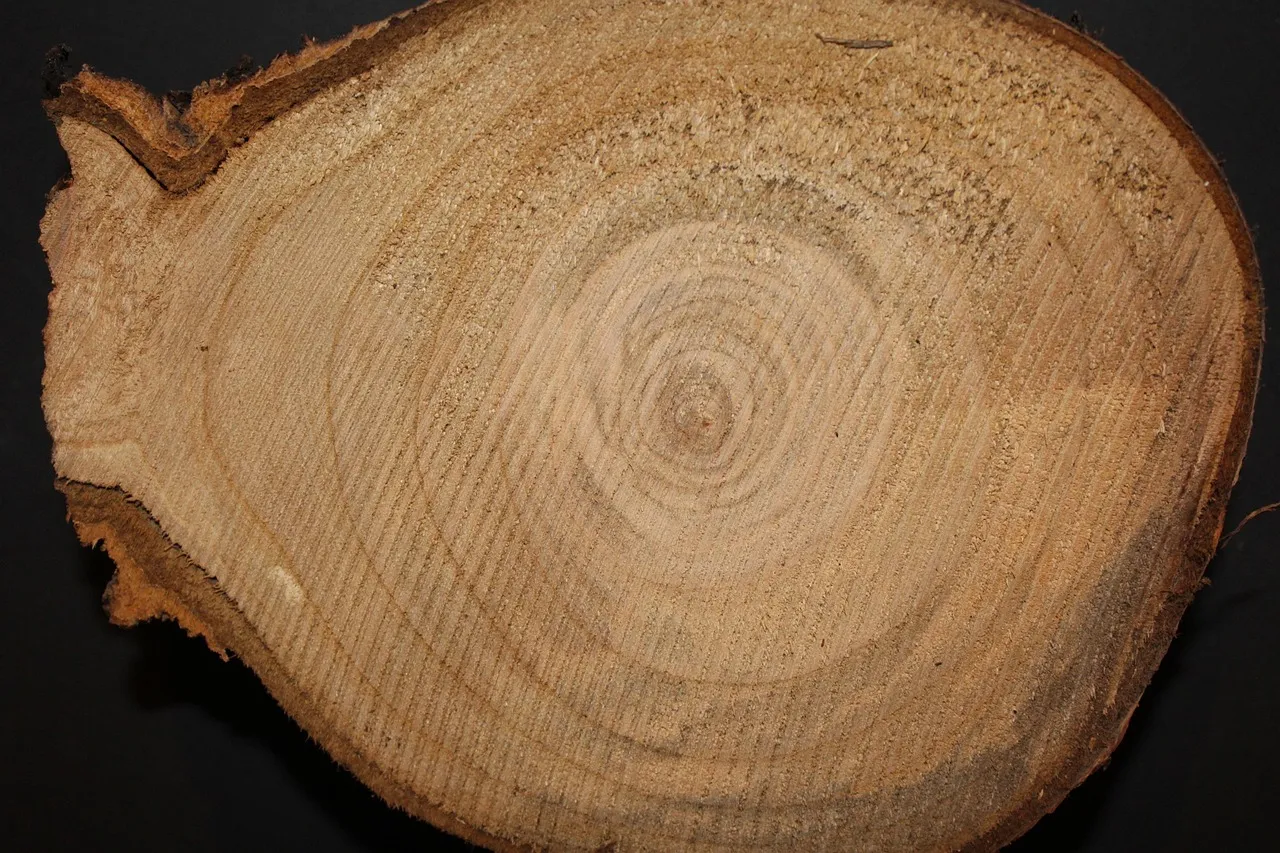
Heartwood and sapwood
- 1Heartwood: the part durability ratings describe.
- 2Sapwood: the outer growth rings, not durable outdoors unless treated.
WoodSolutions explains that durability ratings apply only to heartwood, which contains natural extractives that resist fungi and insects. Sapwood, the tree’s outer growth rings, has no natural durability and is easily attacked if left untreated, so even a Class 1 hardwood can fail early if a piece is mostly untreated sapwood.
Treatment works the other way round. Sapwood is porous and can be thoroughly treated; heartwood resists penetration, and in many species, Spotted Gum and Blackbutt among them, the heartwood cannot be brought up to H3 or H4 even with pressure treatment.
The four durability classes
| Class | Above ground | In ground | WoodSolutions’ examples |
|---|---|---|---|
| Class 1 | > 40 years | > 25 years | Spotted Gum, Ironbark, Tallowwood, Merbau |
| Class 2 | 15–40 years | 15–25 years | Blackbutt, Jarrah, Silvertop Ash |
| Class 3 | 7–15 years | 5–15 years | Victorian Ash, Tasmanian Oak |
| Class 4 | 0–7 years | < 5 years | Radiata Pine, Slash Pine, Hoop Pine |
Spotted gum, the brown this site is drawn in, is one of WoodSolutions’ Class 1 examples. WoodSolutions also warns that AS 5604’s classes are not harmonised with overseas systems, so a “Class 2” rating in another country can’t be assumed to be equivalent.
Treatment levels, H1 to H6
The AS 1604 series sets hazard classes for preservative-treated timber, each one a step up in biological threat. The table below summarises WoodSolutions’ version in our own words.
| Hazard class | Exposure | Biological threat | Typical applications |
|---|---|---|---|
| H1 | Inside, kept dry | Borers alone | Wall linings, furniture |
| H2/H2F | Inside, kept dry | Termites as well as borers | Frames where termites occur |
| H3 | Outside, clear of the ground | Insects and fungal decay | Cladding, fascias, decking |
| H4 | In contact with the ground | Termites and severe decay | Posts for fences and pergolas |
| H5 | In wet ground | Termites and extreme decay | Piles, retaining walls |
| H6 | In the sea | Extreme decay and marine borers | Sea walls, jetty piles |
What WoodSolutions recommends for a deck
Its Domestic Timber Deck Design guide sets out the durability of timber for each part of a raised deck:
- Above the ground (framing, boards and posts on stirrups): hardwood with an above-ground natural durability rating of Class 1 or 2 and its sapwood taken out or treated to H3, or softwood with preservative treatment of H3 or higher.
- Embedded in the ground (embedded posts): in-ground natural durability Class 1, or preservative-treated to H5. WoodSolutions’ durability guide gives in-ground posts as Class 1 or H4–H5 treated; the deck guide asks for H5.
- Not suitable for decks: softwood treated to H2, H2F or H2S, and timber I-beams, treated or untreated.
For decks less than 400 mm off the ground, the guide asks for more: any framing sitting on the ground or within 150 mm of it should resist termites and carry an in-ground durability rating of Class 1 with its sapwood taken out or treated to H4, or else be treated to H4 or higher. On a low deck it says to use only termite-resistant timber, and to leave a gap of at least 40 mm between the house and the deck so there is room for pest inspection and air flow. Framing more than 150 mm above the ground should be termite resistant and rated Class 1 or 2 for above-ground durability, with the sapwood taken out or treated to H3, or else be softwood with preservative treatment to H3 or higher. The decking boards should be termite resistant and rated Class 1 or 2 for above-ground durability, with the sapwood taken out or treated to H3, or else be treated to H3 or higher. The ratings apply to the heartwood only.
Reading the label
WoodSolutions says treated timber must be labelled or branded with its treatment type, its H class and who certified it, and that the colour of treated timber does not guarantee it complies. Cut ends of treated products must be re-treated to keep their protection.
CCA-treated timber and decks
In its arsenic timber treatments review, with a final report released in March 2005, the APVMA found a possible health risk for people, children especially, in frequent and close contact with CCA-treated timber in things like decks, garden furniture and playground structures. It cancelled CCA treatment of timber meant for uses where people would often touch it, and its final recommendations name “patio and domestic decking, and handrails” among those uses. Timber treated with CCA must be clearly labelled.
The APVMA found no evidence to justify cancelling CCA for uses such as fence posts and structural timbers, where frequent contact is unlikely. It also says that while it regulates CCA products, it has no power over how people use structures built from the timber.
Australian Pesticides and Veterinary Medicines Authority, arsenic timber treatments review.
WoodSolutions’ deck guide says handrails or decking boards treated with CCA are not allowed where children could come into frequent or intimate contact with them, that CCA-treated timber can be used elsewhere in a deck such as sub-floor framing, and that timber treated with ACQ, copper azole or LOSP can be used as handrails and decking boards. It adds that LOSP-treated timber is not suitable for in-ground use.
Fixings near the coast
WoodSolutions says all framing bolts, screws, nails and other hardware on a deck should be hot-dipped galvanised or stainless steel, and that electroplated fasteners are not suitable because the plating breaks down early. It says fixings within 1 km of the coast, or within the splash zone of a swimming pool (a minimum of 1.0 m from the pool’s edge), must be stainless steel. Its durability guide adds that some preservatives, CCA and ACQ among them, corrode zinc-plated steel.
Durability is more than the species
WoodSolutions describes the durability of timber in service as a function of four interrelated factors: the species, the exposure conditions, preservative treatment, and design detailing and maintenance. Its examples: Class 1 timber against concrete without ventilation may still decay, while a Class 3 species with H3 treatment, kept well ventilated and protected, can last for decades.
NSW Fair Trading’s Guide to Standards and Tolerances gives a related example from the other side: if a builder installs untreated pine in an external deck where the structure called for durable timber, the builder is likely to have to replace it. How to look after the timber once it is down is in the maintenance guide.